Part 8: What Grandma Left Behind
Grandma Evelyn died peacefully the following spring.
She was eighty-three.
My father called me early one morning. I could barely understand him through his tears.
I drove to Wyoming that same day.
When I arrived, Mom was sitting beside Grandma’s chair, holding one of her old knitting projects. Eric stood by the fireplace, staring at the logs. Olivia had brought flowers from the garden and placed them in a glass vase beside the window.
Dad was on the porch.
He was holding the photograph Grandma had given him at Christmas.
I stood beside him.
“I’m sorry,” I said.
He nodded.
For a while, we watched the trees moving in the wind.
Then Dad spoke.
“She called me last week.”
I turned toward him.
“What did she say?”
“She wanted to know whether I’d remembered to winterize the pipes before the next cold spell.”
Despite everything, I laughed softly.
“That sounds like her.”
He smiled through his tears.
“Then she asked whether I was happy.”
I waited.
“I told her I was trying to be.”
He swallowed.
“She said that was a good start.”
Dad lowered his eyes.
“I spent so many years thinking happiness was something you achieved once you’d secured enough money, enough property, enough respect. Your grandmother understood something I didn’t.”
“What?”
“That a life can be full even when the house is small. That you can be rich and still be lonely. And that you can lose years chasing things you already have.”
He folded the photograph carefully and placed it in his pocket.
“I wish I’d understood sooner.”
I put my hand on his shoulder.
“So do I.”
We stood there together until the wind grew cold.
Then we went inside.
Grandma’s funeral was held a few days later.
People came from the town, from neighboring farms, and from places I’d never heard of. Some had known her for decades. Others had met her only recently.
One woman approached me after the service.
She was in her early forties and wore a simple blue dress.
“Are you Daniel?” she asked.
“Yes.”
She smiled sadly.
“Your grandmother helped me when I was younger. My mother had died, and I was trying to finish college while working two jobs. Evelyn paid for my textbooks one semester. She told me I could repay her by helping someone else when I was able.”
I felt my throat tighten.
“I didn’t know.”
“She never wanted anyone to know.”
The woman looked toward the photographs beside the altar.
“She was a good person.”
After she left, another person came forward with a similar story.
Then another.
A retired teacher told me that Grandma had quietly donated books to a local school.
A farmer explained that she’d once helped his family repair a damaged water system without accepting repayment.
A young man said she’d encouraged him to apply for a scholarship when he was convinced he wasn’t smart enough.
I stood there, listening, and realized that the fortune we’d discovered was only one part of her life.
The real story was the countless small acts of kindness that had never appeared on a bank statement.
After the funeral, the estate was administered according to the legal documents Grandma had prepared. Her financial gifts remained separate from the arrangements for the property and the other assets.
The conservation plan proceeded through the necessary reviews.
The scholarship fund expanded.
The cabin remained standing.
And the family, slowly, learned to gather there without treating every conversation as an opportunity to discuss money.
A year later, I returned to the cabin alone.
Snow covered the porch.
The old rocking chair stood beside the window.
Grandma’s favorite mug remained on the kitchen shelf, exactly where she’d always kept it.
I walked through the rooms, touching the familiar furniture, remembering her voice.
Then I sat beside the fireplace and took out Grandpa’s letter.
I’d carried it in my bag for months.
I read it one more time.
You are allowed to use it wisely.
I thought about the students who had received scholarships.
I thought about the home I’d bought, modest but comfortable, where I could finally invite friends over without worrying about rent.
I thought about my father, who now called me every Sunday, sometimes with nothing important to say.
And I thought about Grandma, who had given us the opportunity to become a better family without demanding that we become perfect.
I folded the letter and returned it to its envelope.
Then I walked outside.
The sky above the mountains was turning gold.
For a moment, I could almost hear Grandpa laughing from the porch, telling me that the birdhouse we’d built together was still the ugliest thing he’d ever seen.
I smiled.
“I’m trying, Grandpa,” I whispered.
And for the first time since Grandma died, I felt peaceful.
Epilogue: The Check That Changed Everything
Three years later, my father and I were cleaning out a storage cabinet in the cabin when he found an old envelope tucked behind a stack of photographs.
He pulled it free.
Inside were the four torn pieces of his original six-million-dollar check, still preserved in the transparent sleeve.
He stared at them for a long time.
Then he handed them to me.
“Keep this,” he said.
“Why?”
“Because I need to remember the man I was when I received it.”
I shook my head.
“You don’t have to keep punishing yourself.”
“I’m not.”
He looked toward the living room, where Mom and Olivia were preparing lunch while Eric argued with a delivery driver about the best route to the property.
“I’m reminding myself that I nearly threw away something valuable because I decided I already knew what it was.”
He paused.
“And I don’t mean the money.”
I understood.
The check had been worth six million dollars.
The land had been worth tens of millions more.
But neither could buy the Christmas dinners we’d missed, the phone calls we hadn’t made, or the years Grandma had spent waiting for someone to stay a little longer.
Those things could only be given freely.
And they could only be appreciated while there was still time.
That afternoon, we gathered around the table for lunch.
Nobody brought up the estate.
Nobody discussed investments.
Dad told a terrible joke about Grandpa’s old birdhouse, and everyone groaned.
Then we laughed.
As I looked around the table, I remembered that first Christmas, when my family had laughed at Grandma’s gift and my father had torn his check into four pieces.
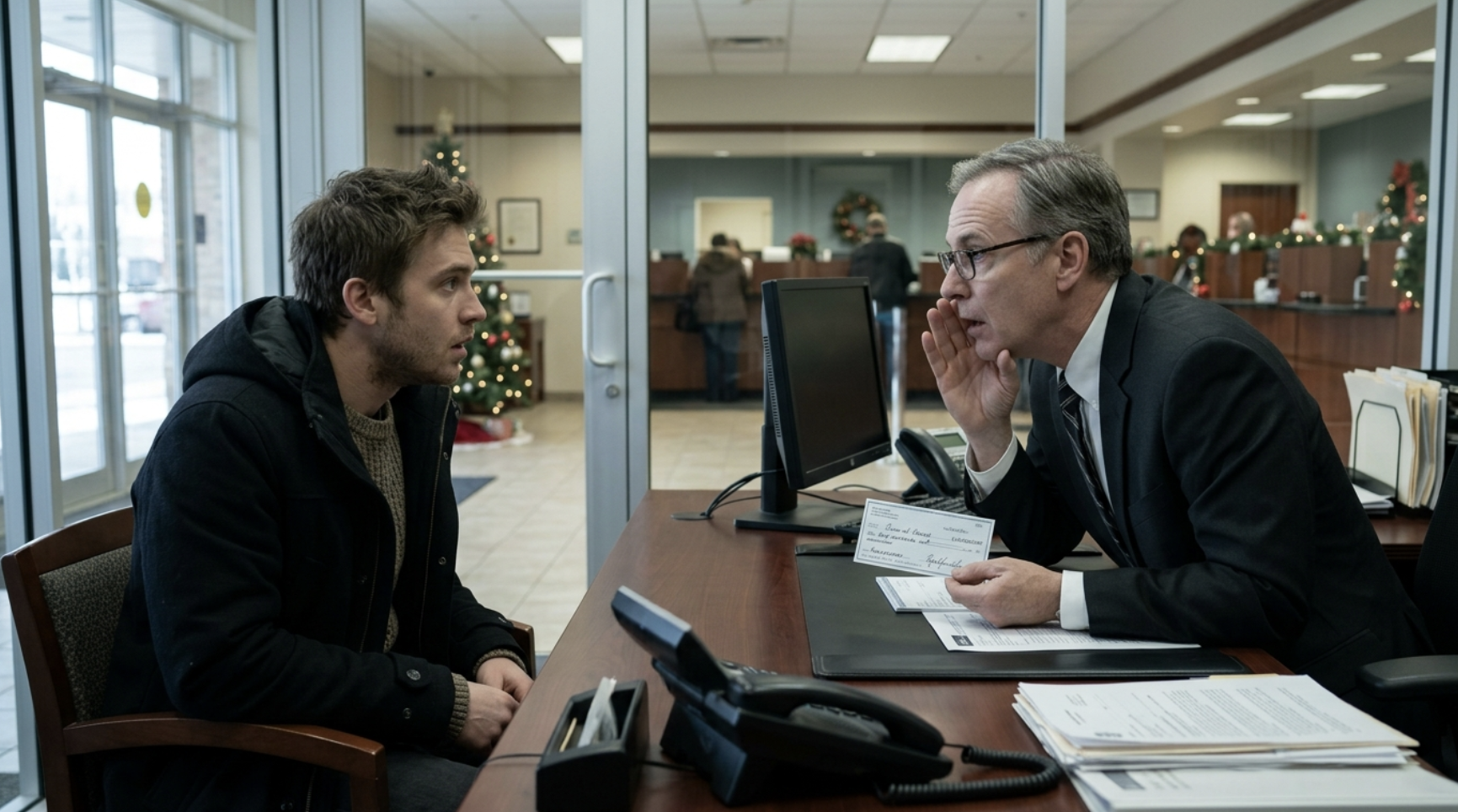
I remembered the bank manager’s pale face.
I remembered the secrets, the arguments, the apologies, and the woman who had quietly watched us reveal ourselves.
And I finally understood why Grandma had never defended the checks.
She hadn’t needed to.
The truth had been there all along.
My grandmother’s six-million-dollar gift didn’t make our family wealthy. It revealed what we had been too distracted to recognize: we already possessed something money could never replace, and we’d almost lost it while arguing over what we might inherit.
I still have my original check tucked inside Grandpa’s letter.
Not because I need proof of the money.
But because whenever I look at it, I remember the most important lesson my grandparents ever taught me.
The greatest inheritance isn’t what someone leaves you when they die. It’s what they teach you while they’re still alive.


