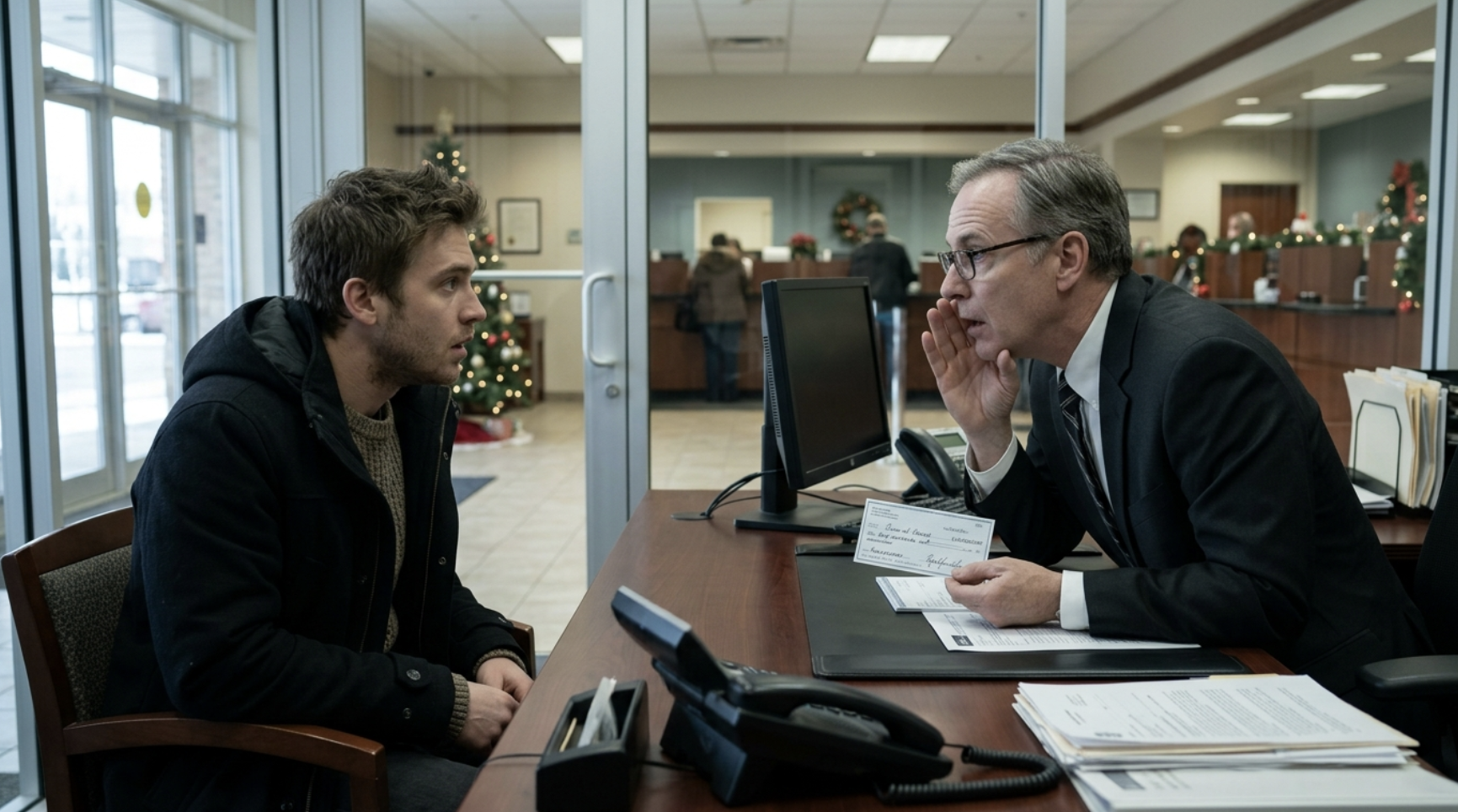
Part 6: The Check My Father Tore Apart
The following Monday, I returned to Boulder.
The bank completed its verification procedures, and my grandmother’s gift was eventually deposited into an account established in my name.
I didn’t quit my job.
I didn’t buy a sports car.
I didn’t move into a mansion.
I paid off my student loans, put a substantial portion into carefully planned investments, and met with a qualified financial adviser to help me manage the money responsibly.
Then I did something I’d been considering for years.
I started a small scholarship program for students from families who struggled to pay for college.
I called it the Walter and Evelyn Harper Scholarship Fund.
It wasn’t enormous at first. I wanted to learn how to manage it properly before expanding it. But the first scholarships helped three students pay for books, tuition, and transportation.
When I told Grandma, she cried.
Not because of the amount.
Because she understood why I’d done it.
Over the next few months, the rest of the family began handling their gifts in different ways.
Mom used part of hers to pay off her mortgage and establish a savings account for retirement.
Eric, who had spent years dreaming about starting a business, hired an accountant and developed a realistic business plan instead of rushing into an expensive investment.
Olivia returned to college to finish a degree she’d abandoned years earlier. She told Grandma that for the first time, she could choose a career based on what she wanted to do rather than what she thought would impress other people.
They weren’t suddenly perfect.
Nobody becomes a different person overnight simply because their bank balance changes.
But something had shifted.
They began calling Grandma more often.
At first, their conversations were awkward. They asked about the weather, the cabin, and whether she needed anything.
Then, gradually, they began asking about her life.
Mom learned how to make Grandpa’s favorite apple pie from the recipe Grandma had kept in an old notebook.
Eric began visiting every month to help maintain the property.
Olivia started sending Grandma photographs from college and asking for advice about her classes.
And Dad?
Dad remained distant.
He called occasionally, but his conversations with Grandma were short. He never apologized for tearing up the check.
I wondered whether he ever would.
Then, six months after Christmas, I received a call from Grandma’s attorney.
He explained that my father had contacted his office to ask about the legal structure of the estate.
I immediately worried that another argument was coming.
But the attorney surprised me.
“Your father has asked for a meeting to discuss the conservation plan,” he said. “He says he wants to understand the arrangements before making any assumptions.”
“Is that good news?”
“It could be. We’ll have to see what he says.”
A week later, Dad called me.
“Daniel, are you going to the cabin this weekend?”
“I was planning to.”
“Can we drive up together?”
I nearly dropped my phone.
“Together?”
“If you don’t mind.”
I hesitated.
Then I said yes.
We drove through the Wyoming countryside in uncomfortable silence for the first hour.
Eventually, Dad turned down the radio.
“I owe you an apology.”
I kept my eyes on the road.
“For what?”
He sighed.
“Don’t make me list everything.”
I almost smiled.
“I’m not.”
He stared through the windshield.
“I shouldn’t have torn up that check. I shouldn’t have mocked your grandmother. And I shouldn’t have called you a fool for taking it to the bank.”
“No,” I said. “You shouldn’t have.”
He nodded.
“I thought she was making fun of us. And when I learned about the property, I thought she’d been keeping things from me because she didn’t trust me.”
“Did you ever ask her why?”
“No.”
He rubbed his hands together.
“I suppose I was too busy deciding what I thought she should do.”
We drove another mile.
Then he said something I hadn’t expected.
“Your grandfather and I argued about money for years. I wanted him to sell the land because I thought it would secure everyone’s future. He thought I was looking at everything as a transaction.”
“Were you?”
“Sometimes.”
He looked at me briefly.
“After he died, I kept thinking that if he’d listened to me, things might have been easier. I never considered that perhaps he was trying to teach me something.”
I didn’t know what to say.
Dad had never been good at admitting he was wrong. Hearing him do it felt like watching a mountain move.
When we arrived at the cabin, Grandma was waiting on the porch.
Dad climbed out of the car and stood in front of her.
For a moment, neither spoke.
Then he reached into his coat pocket and removed something.
Four pieces of paper, carefully preserved inside a transparent sleeve.
The torn pieces of his check.
I’d never seen them before.
Dad held them out to Grandma.
“I kept them,” he said.
She stared at the sleeve.
“Why?”
“I don’t know. Maybe because I knew I’d made a mistake, even while I was pretending I hadn’t.”
His voice cracked slightly.
“I’m sorry, Mom.”
Grandma took the sleeve.
She didn’t scold him.
She didn’t remind him of every cruel thing he’d said.
She simply reached for his hand.
“Oh, Daniel.”
Dad lowered his head.
“I thought the money was what mattered. Then I thought the land was what mattered. I was so busy thinking about what I might receive that I forgot what I’d already been given.”
Grandma pulled him into a hug.
And my father, a man who had spent most of his life hiding his feelings behind anger, began to cry.
I turned away to give them privacy.
Some apologies arrive too late to erase the hurt.
But sometimes they arrive early enough to begin repairing it.
That afternoon, Dad sat with Grandma for nearly three hours.
He asked about Grandpa’s business, the early years, and the decisions they’d made to protect their savings.
He listened to stories he’d heard a hundred times before.
And when Grandma’s cough grew worse, he noticed.
“Mom, have you seen a doctor about that?”
She waved him away.
“It’s just an old woman’s cough.”
“Then we’ll make an appointment.”
He didn’t ask whether she wanted him to take charge of her life.
He asked whether she would let him help.
It was a small difference.
But it mattered.


