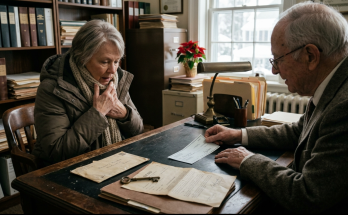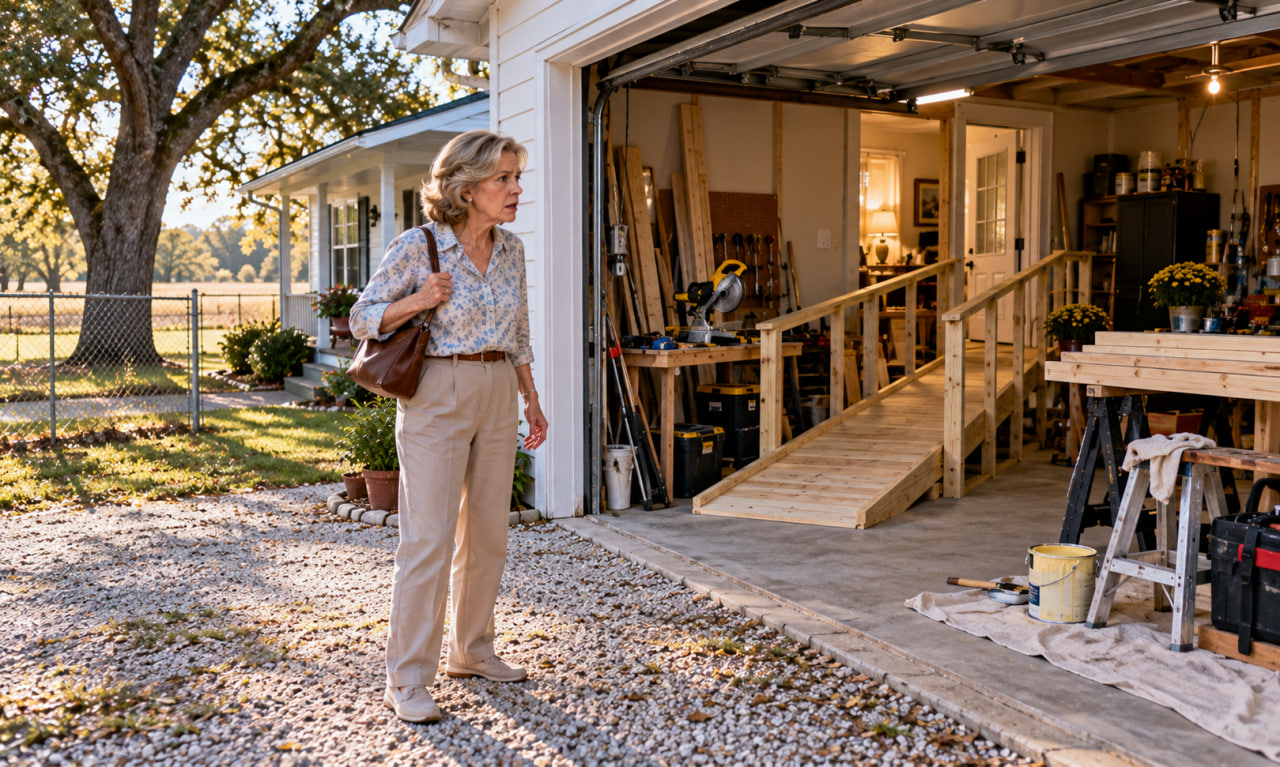
Neither of us had figured out how to move forward without carrying the past.
I sat down at his kitchen table.
“Have you eaten?”
He blinked.
“What?”
“Have you eaten today?”
“Winnie, I—”
“That’s what I thought. You have eggs?”
He laughed, a surprised, almost boyish sound.
“Yes, ma’am.”
“Then cook them. I’ve driven forty minutes, and I’m not leaving until somebody in this house gets a proper meal.”
For the first time since I’d arrived, his shoulders relaxed.
And as he moved around the kitchen, I noticed something else.
On the refrigerator was a handwritten list.
Things to finish before Christmas:
Complete ramp.
Install bathroom rails.
Finish kitchen.
Fix back door.
Ask Winnie to dinner.
I stared at the last item.
Then I smiled.
Because, for the first time in a long time, somebody had written my name on a list of things worth looking forward to.
I didn’t know yet how much trouble that little list would bring.
I didn’t know that before the week was over, my son would drive to Wendell’s house.
And I certainly didn’t know that the man accusing Wendell of stealing my husband’s insurance had already begun making plans for that money himself.
But I would learn.
Soon enough.
And when I did, the truth would change my family forever.
I returned home that afternoon feeling lighter than I had in months.
I had promised Wendell I wouldn’t tell anyone about the surprise renovations before Christmas. He had looked so hopeful when he asked that I couldn’t bring myself to ruin it.
But there was one thing I hadn’t anticipated.
Zach had installed a banking alert on my phone.
He’d insisted it was for my protection after a neighbor of his lost several thousand dollars to a phone scam. I had agreed because I trusted my son.
That evening, while I was preparing supper, my phone rang.
“Mama, where were you today?”
I looked at the screen.
“Hello to you, too, Zach.”
“Don’t play games. I stopped by your house this afternoon, and you weren’t home.”
“I had errands.”
“What errands?”
“Since when do I have to submit a schedule to you?”
There was a long silence.
Then he said, “You went to see him, didn’t you?”
I put down my knife.
“Who?”
“Wendell.”
I stared at the kitchen wall.
How had he known?
“Did you put a tracking app on my phone?”
“What? No! I just know you, Mama.”
It was a terrible lie.
I knew my son. I knew the little pause before he lied, the way his voice rose at the end of a sentence when he wanted to sound innocent.
“Zachary, I’m hanging up now.”
“Wait. Did he ask you for money?”
“No.”
“Did he show you his bank statements?”
“Good night, Zach.”
I ended the call.
My hands were shaking.
For years, I had told myself Zach was protective because he loved me. His father had died unexpectedly, and perhaps my son was frightened of losing me, too.
But protection shouldn’t feel like imprisonment.
The next morning, I called my bank.
I asked to speak to someone about the account access permissions.
The woman on the phone was patient and professional. She explained that Zach had been given viewing access and that several notifications were going to his email address.
“Would you like to change those settings, ma’am?”
I hesitated.
He was my son.
I had carried him when he was a baby. Sat beside him through fevers. Stayed awake waiting for him to come home as a teenager. Helped him buy equipment for his body shop when business was slow.
How did a mother begin protecting herself from her own child?
“Yes,” I said finally. “I’d like to change them.”
By lunchtime, my banking access was private again.
I didn’t feel triumphant.
I felt sad.
Then my phone rang once more.
It was Megan.
“Mama, what’s going on?”
I closed my eyes.
“What did your brother tell you?”
“That you’ve been visiting Wendell’s house behind everyone’s back. He says the man has probably convinced you to hide things from us.”
I took a slow breath.
“Megan, have you ever met Wendell?”
“No.”
“Have you ever had supper with him?”
“No, but—”
“Then how can you judge him?”
She went quiet.
I continued, more gently this time.
“I know you and your brother worry about me. I appreciate that. But worrying about me doesn’t mean you get to decide who I’m allowed to see.”
“Mama, we’re just trying to protect you.”
“I know, sweetheart. But protection without trust can hurt just as much as neglect.”
She didn’t answer.
After a moment, she whispered, “Zach says Dad would never have wanted you to date another man.”
My throat tightened.
There it was.
The weapon neither of my children seemed to realize they were using.
Their father.
My husband.
The man who had loved me for thirty-nine years and would never again sit beside me at breakfast.
“Dwight loved me,” I said. “And I loved him. Nothing I do now can erase that.”
“I didn’t mean—”
“I know. I love you, Megan. But I need you to understand something. I am still your mother. I am also a woman who is alive, and I still have a life to live.”
When we hung up, I cried.
Not because I thought I was wrong.
Because sometimes the hardest part of growing older is discovering that the people you raised still see the child they once knew when they look at you.
They remember how you taught them to cross the street.
They forget you taught them how to stand on their own two feet.
That Sunday, Wendell came to supper as usual.
He brought a pecan pie from a bakery in town and apologized because he’d forgotten to buy whipped cream.
I laughed so hard I nearly dropped the serving spoon.
It felt wonderful to laugh without having to explain why.
But Zach arrived twenty minutes later.
He didn’t call first.
He simply walked through my front door with Jordyn behind him.
His eyes went straight to Wendell.
“Well,” he said. “There he is.”
Wendell stood politely.
“Evening, Zach.”
“Don’t pretend we’re friends.”
“Zach,” I warned.
“No, Mama. We need to talk.”
“Then talk respectfully in my house.”
He looked at me as if he couldn’t believe I had said it.
Then he turned back to Wendell.
“I know you have some kind of project going on out at your place. What are you really building?”
Wendell set down his fork.
“That’s my business.”
Zach gave a short laugh.
“Of course it is.”
“Zachary, sit down,” I said.
He didn’t.