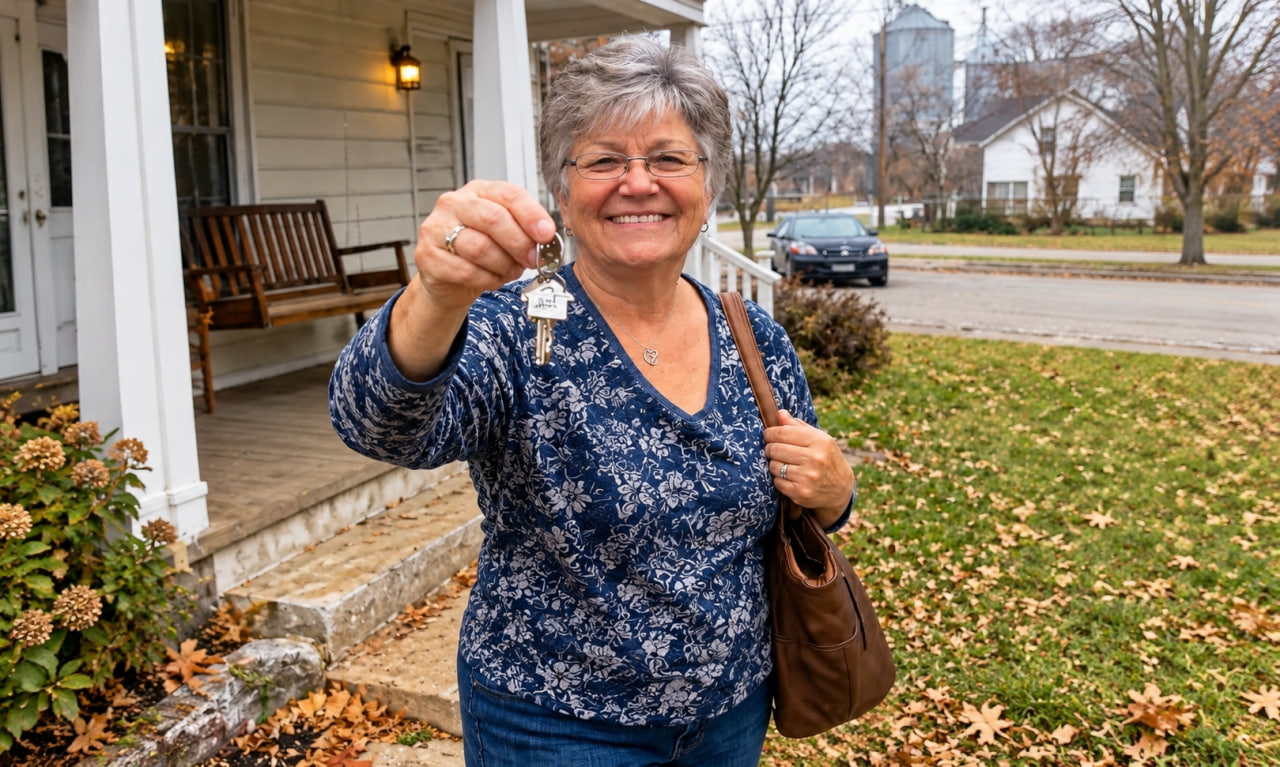
My daughter offered to let me stay in her basement.
PART3
Underneath it, Todd had written my monthly Social Security payment: $1,640.
He’d subtracted the proposed rent, estimated utilities, and a figure for groceries. Then he’d written another line.
Childcare replacement cost: $720. I stared at that one. “What is this supposed to mean?”
Todd rubbed his forehead. “It’s what we’d have to pay somebody else to watch the children four days a week.”
“Then why did you put it on a paper asking me to pay you?”
He opened his mouth, but nothing came out.
Michelle finally spoke.
“Because Todd thought it was fair.”
I turned to her.
“And you?”
She looked down at her hands.
“I thought it would be easier.”
“Easier than what?”
Her lower lip trembled.
“Everything.”
That wasn’t an answer. Not yet.
I turned another page.
There were bank balances, household expenses, and a list of monthly payments. Near the bottom, Todd had circled a figure so many times the paper was beginning to tear.
$18,400.
Beside it were the words past due.
“What’s this?” I asked.
Todd reached for the pad, then stopped when he saw my expression.
“It’s a business debt.”
“What business?”
“The machine shop.”
He worked at the plant, but for the past three years he’d also been trying to establish a small repair business out of a rented garage. Dale had once helped him buy tools for it. Todd had talked about expanding the business, hiring a young man from town, and eventually working for himself.
I hadn’t realized things were going badly.
“How long have you owed this money?”
“Eleven months.”
“And you thought charging your widowed mother to live in your basement would solve it?”
“No.” He swallowed. “I thought it would help me keep everything from falling apart.”
I leaned back.
Outside, a grain truck rattled past the window. The familiar sound made me feel strangely anchored, as if the world were reminding me that it would continue whether my family was behaving sensibly or not.
“Todd, I didn’t ask you to rescue me. I had enough money for a small place of my own. Why didn’t you simply tell me you were in trouble?”
He gave a bitter little laugh.
“Because I was ashamed.”
For a moment, I almost felt sorry for him.
Then I looked at the childcare figure again.
“Shame doesn’t explain why you thought my time was worth nothing.”
His face reddened.
“You’re right.”
Those two words surprised me more than any excuse could have.
Michelle reached across the table and touched my wrist.
“Mom, I need to tell you something.”
I waited.
“When Todd suggested the basement, I didn’t like the idea either. But I kept thinking about how much easier it would be if you were there. Sadie wouldn’t have to go to daycare. Ben wouldn’t need somebody to pick him up after preschool. I’d have help with supper and laundry, and I could take more shifts at the clinic.”
She worked three days a week as a receptionist at the medical clinic. She’d been hoping to increase her hours.
“I told myself you’d be happier with us,” she continued. “I told myself that having the grandchildren around all day would make you feel useful.”
“Useful,” I repeated.
She began to cry again.
“I know how that sounds.”
“No, sweetheart. I don’t think you do.”
She pulled her hand away.
I hated hurting her. Even then, I wanted to reach over and smooth her hair, as I’d done when she was small and had scraped her knee on the gravel driveway.
But a mother can love her daughter and still refuse to pretend that something cruel was kind.
“I spent twenty-two years balancing other people’s accounts,” I said. “I know the difference between a fair arrangement and one that only looks fair on paper.”
Todd nodded.
“I know.”
“Then why is there another page?”
He went still.
I turned to the next sheet.
At first, the handwriting seemed ordinary. A list of dates. A few names. A column labeled property.
Then I saw my husband’s name.
Dale Mercer.
Below it was a date from the previous spring, followed by a handwritten amount.
$32,000.
I read it twice.
“Why is my husband’s name on this?”
Neither of them answered.
I looked at Michelle.
“What’s going on?”
She pressed both hands against her mouth.
Todd stood abruptly, walked to the window, and stared out at the grain elevator.
“Tell her,” Michelle whispered.
He turned around.
“Last April, your husband and I made an agreement.”
The room seemed to shrink.
“Dale had been dead for more than a year by then.”
“I know.”
“Then how could he make an agreement with you?”
Todd looked at the legal pad.
“He made it before he died. I didn’t find the papers until April.”
I gripped the edge of the table.
“What papers?”
“Your husband lent me thirty-two thousand dollars. The money was meant to help me get the repair business off the ground. He told me not to mention it to you until I’d paid him back.”
I couldn’t speak.
Dale had always been generous. Sometimes too generous, in my opinion. He’d loaned neighbors money for seed, helped a cousin repair a tractor, and once bought a new set of tires for a young farmhand who couldn’t afford them.
But thirty-two thousand dollars was not the sort of money a man could lend without discussing it with his wife.
“Where did he get that much money?”
“From the sale of some equipment and a savings account he’d kept before we were married,” Todd said. “He said it was his to lend.”
That sounded like Dale.
It also sounded like something he would have told me about eventually.
I turned another page.
There was a photocopy of a bank transfer, followed by a short note in Dale’s unmistakable handwriting.
For Todd’s business. This is a loan, not a gift. If I don’t live to see it repaid, make sure Judy knows where the money went. Don’t let pride ruin the family.
My eyes blurred.
I had to set the page down.
Dale’s handwriting had always leaned slightly to the right. He wrote grocery lists in block letters and signed birthday cards with a flourish that made the final e look almost like a fishhook.
I’d spent nearly two years learning how to live without seeing his handwriting.
Now it was sitting on my kitchen table, asking me to understand something he’d never explained.
“Why didn’t you show me this when you found it?” I asked.
Todd’s voice was barely audible.
“Because I couldn’t pay it back.”
“How much have you repaid?”
“Six thousand.”
“So you owe twenty-six thousand dollars.”
He nodded.
“And when you realized you couldn’t pay it, you decided to collect rent from me.”
“No.” He shook his head quickly. “I wasn’t going to use your rent to pay the loan.”
“Then what was the $800 for?”
He looked at Michelle.
She closed her eyes.
Todd finally answered.
“Part of it was to cover our expenses. Part was because I was afraid you’d ask about the money if you moved in with us and started sorting through Dale’s things.”
I stared at him.
“What things?”