PART8
It wasn’t luxurious.
The kitchen was small, the living room needed fresh paint, and the balcony overlooked a row of trees rather than a beautiful garden.
But the rent was manageable, and it was close enough to Fletcher’s workplace.
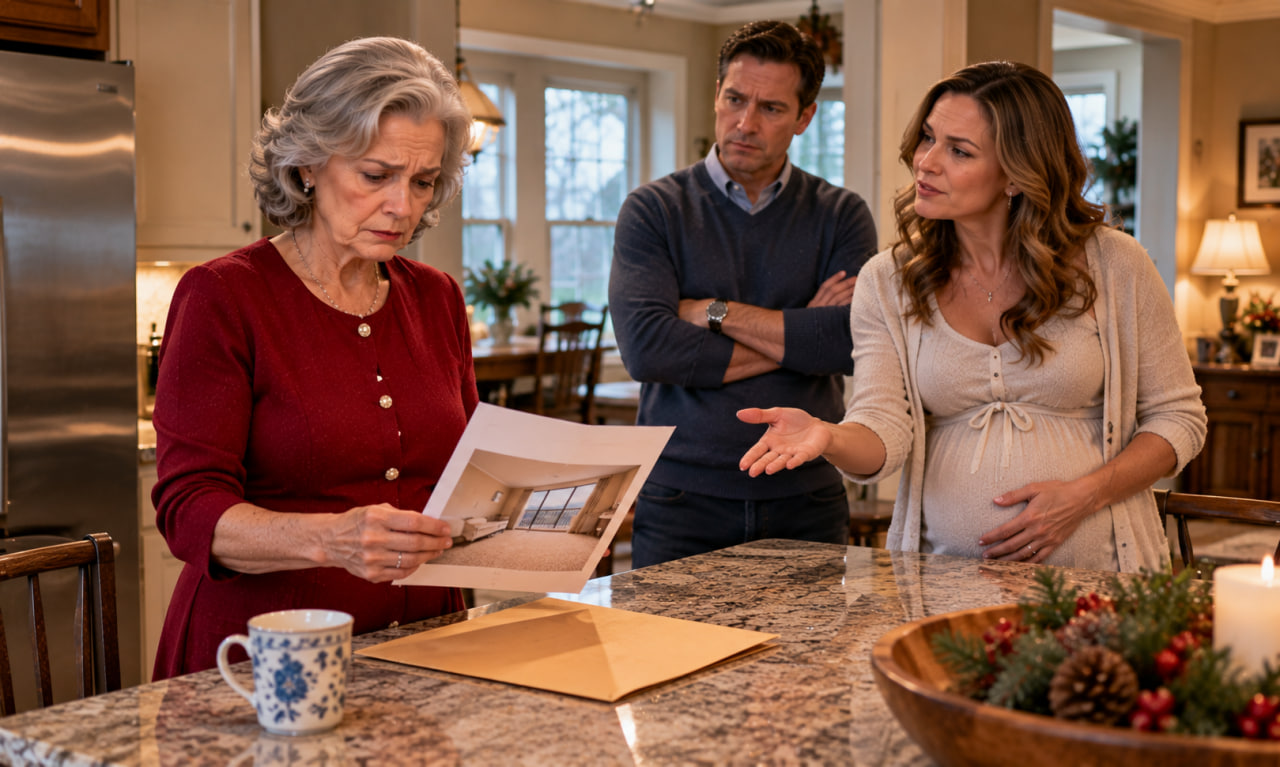
Serene looked at the photographs on the rental listing.
“I think this might work,” she said.
Fletcher nodded.
“Me too.”
I felt genuinely happy for them.
Then Serene turned toward me.
“Would you like to come and see it with us?”
The question caught me off guard.
“Are you sure?”
She gave a small, uncertain smile.
“Of course. I’d like you to.”
So the three of us visited the apartment the following afternoon.
The rooms were smaller than those in my house, but the windows let in plenty of sunlight. Serene stood in the second bedroom, imagining where the crib would go. Fletcher checked the water pressure and examined the kitchen cabinets.
I watched them move through the space.
For the first time, they looked like two adults building their own life rather than two people waiting for me to surrender mine.
On the drive home, Serene turned toward me.
“I’m sorry about the apartment listing.”
I looked at her.
“The one you left on my counter?”
She nodded.
“I thought I was being practical. Now I realize I didn’t even ask whether you wanted to move.”
“No, you didn’t.”
She looked down at her hands.
“I wouldn’t want someone to do that to me.”
“Then remember how it felt.”
She nodded.
When we returned home, I went upstairs to the study.
I had something I wanted to do before Fletcher and Serene moved out.
Inside the bottom drawer of Leonard’s desk was a small wooden box he had made during his final year. It contained spare keys, old photographs, and several letters he had written but never sent.
I had opened it only a few times since his death.
That evening, I found a letter addressed to me.
My name was written in his familiar handwriting.
I sat down before opening it.
My dearest Eleanor,
If you’re reading this, I hope you’ve found a way to keep enjoying the life we built together.
I know you. You’ll spend so much time worrying about Fletcher that you’ll forget you’re allowed to worry about yourself, too.
Our boy will always be our boy, but one day he must become the man who builds his own home, makes his own mistakes, and learns how to repair what he breaks.
Please don’t confuse loving him with carrying every burden for him.
You have always been stronger than you realize, but strength doesn’t mean you must endure everything quietly.
Keep the roses alive. Sit in the chair by the window. Read your books. Make friends. Laugh when something is funny. And when the house becomes too quiet, remember that the love we put into it will never disappear.
You don’t owe the world your unhappiness just because someone else needs help.
I love you, always.
Leonard.
I pressed the letter against my chest.
For twelve years, I had lived with the empty space he left behind. I had thought keeping the house unchanged was a way of keeping him close.
But as I sat in the warm light of the study, I realized something.
Leonard hadn’t loved the house because it was perfect.
He had loved it because we had made it a place where people could live, grow, and find their way.
And he would never have wanted me to become a prisoner of its memories.
I carefully folded the letter and placed it back in the wooden box.
Then I went downstairs.
Fletcher was in the kitchen, making coffee.
“Everything all right, Mom?”
I smiled.
“Yes, son. Everything is going to be all right.”
For the first time in a very long time, I believed it.
The following month, Fletcher and Serene moved into their new apartment.
The morning was busy with cardboard boxes, borrowed furniture, and trips between the house and the moving van.
I helped pack the kitchen utensils and wrapped Serene’s favorite dishes in newspaper. Fletcher carried the last of his belongings downstairs while Serene checked the rooms to make sure nothing had been left behind.
When the final box was loaded, the three of us stood in the living room.
The beige glider was gone.
My reading chair stood beside the window again.
The upstairs study was quiet, and Leonard’s books were waiting on their shelves.
Serene approached me.
“Thank you for letting us stay here.”
I looked at her, surprised by the words.
“You’re welcome.”
“I know things became difficult. I wish I had handled everything differently.”
“So do I.”
She took a breath.
“I want you to be part of the baby’s life. Not because you can help us with childcare or because you have a big house. Because you’re Fletcher’s mother, and you’re going to be the baby’s grandmother.”
My eyes began to sting.
“That is all I’ve ever wanted.”
She hugged me.
It was a little awkward at first, as though neither of us knew whether we were allowed to trust the moment.
Then I felt her relax.
I held her gently.
When she stepped back, she was crying.
“So am I,” I admitted.
Fletcher came over and wrapped his arms around both of us.
For a few seconds, we stood together in the middle of the room.
Then the moving company called from the driveway, and the moment ended.
Fletcher carried the last box to the van.
Before leaving, he returned to the doorway.
“Mom?”
“Yes?”
“I’m sorry I didn’t stand up for you sooner.”
I looked at my son.
“I wish you had, too.”
He nodded, accepting the truth without defending himself.
“I can’t change what happened. But I can do better.”
I reached up and touched his cheek.
“Then do better, Fletcher. Not just with me. With everyone you love.”
He kissed my forehead.
“I will.”
Then he left.
I watched the van disappear down the street.
When I closed the front door, the house was quiet.
For the first time in months, it was the kind of quiet I had chosen.
I walked through every room, touching the walls and straightening the cushions. I opened the upstairs study window and let the autumn breeze move through the curtains.
Then I made myself a cup of chamomile tea.
I sat in Leonard’s chair and watched the afternoon sunlight fall across the floor.
My home was still here.
And so was I.
Six weeks later, Serene gave birth to a healthy baby girl.
Fletcher called me at 4:18 in the morning.
“Mom, she’s here!”
I sat up so quickly that I nearly dropped my phone.
“Is Serene all right?”
“She is. They’re both doing well.”
I covered my mouth with my hand.
“What is her name?”
“Lily.”
I began to cry.
Lily.
A little flower, just as Leonard would have loved.
“I’ll come as soon as I can,” I said.
When I arrived at the hospital, Fletcher was standing beside Serene’s bed, looking exhausted and happier than I had seen him in years.



One Comment on “PART8: My Daughter-in-Law Tried to Move Me Out of My Own House at 72—Then I Placed an Envelope on the Kitchen Counter”