PART5
I said nothing.
During lunch, they spoke enthusiastically about wallpaper, changing tables, storage cabinets, and the possibility of converting the upstairs study.
Serene showed them pictures on her phone.
Marjorie suggested moving my books into the garage.
Dennis asked whether the old desk could be sold.
Each suggestion arrived as though the decision had already been made.
Finally, Marjorie placed her fork down.
“Perhaps it would be best for everyone if you moved into that apartment Serene found. You’d have less to maintain, and the young family could settle in properly.”
I folded my napkin.
“Have you ever considered asking me what I want?”
She seemed taken aback.
“Of course, dear. But surely you understand that things change when a baby arrives.”
“Yes. They do. A baby changes a family. It doesn’t erase the people who were already in it.”
No one spoke.
I continued calmly.
“I love my son. I am excited about becoming a grandmother. But I will not be pressured into leaving my home. I have lived here for twenty-two years, and I intend to remain here.”
Marjorie glanced at Serene.
“I don’t think anyone is trying to pressure you.”
I looked toward the kitchen counter, where the apartment listing still lay beneath a small stack of mail.
“Then perhaps someone can explain why an apartment was selected, the rent circled, and moving arrangements discussed before I ever agreed to move.”
Dennis cleared his throat.
“Serene, is that what happened?”
Serene’s face reddened.
“We were trying to help!”
“Then help me understand,” I replied. “Why does everyone seem to believe that my home belongs to the family, but my decision about it belongs to nobody?”
The question hung over the table.
For the first time, Marjorie looked uncomfortable rather than certain.
Dennis set down his glass.
“Perhaps we should let you and Fletcher work this out privately.”
Serene pushed her chair back.
“Fine. I see how this is going to be.”
She walked into the living room.
Fletcher followed her.
A few minutes later, their voices rose behind the closed door.
I couldn’t hear every word, but I heard enough.
“You told me she would agree,” Serene snapped.
“I said she might!”
“You said we could have the upstairs rooms!”
“I thought she’d be reasonable!”
I closed my eyes.
Reasonable.
Apparently, reasonable meant agreeing to whatever they wanted.
When lunch ended, Marjorie apologized for the awkwardness.
“I think we got carried away,” she admitted quietly. “We’re excited about becoming grandparents, and perhaps we didn’t stop to consider how you felt.”
I appreciated her honesty.
“Thank you,” I said. “That’s all I’ve been asking for.”
She squeezed my hand before leaving.
Serene didn’t say goodbye.
Fletcher stood in the doorway, looking torn between following his wife and staying behind.
Finally, he said, “I’ll talk to you later, Mom.”
I nodded.
I hoped he would.
But I was beginning to understand that hope alone could not repair what silence had broken.
That evening, I was watering the roses when I noticed a car parked across the street.
A man sat behind the steering wheel, looking toward my house.
I recognized him after a moment.
He was a real estate agent who had once helped a neighbor sell her property.
When I returned indoors, I found Fletcher standing in the kitchen with his phone in his hand.
“Was that man outside here to see you?” I asked.
He froze.
“What man?”
“The real estate agent parked across the street.”
Fletcher looked toward the window.
Then he exhaled.
He didn’t answer immediately.
I waited.
Finally, he said, “She wanted to know what the house might be worth.”
“Nothing. I wasn’t involved in that part.”
“Did you know she had contacted him?”
He hesitated.
That hesitation told me more than his answer could have.
“Fletcher.”
“Yes,” he admitted. “She mentioned it.”
I gripped the back of a chair.
“And you didn’t think I should know?”
“I told her it was a bad idea.”
“But you let it happen.”
He looked miserable.
“Mom, I don’t know how to handle this anymore. Serene is pregnant, she’s anxious about money, and every conversation turns into an argument.”
I stared at my son.
“So you decided it was easier to let her plan my future than to disagree with her?”
He lowered his head.
I felt a familiar ache in my chest, the kind that comes when a person you love finally confirms something you’ve been afraid to believe.
“Do you want this house, Fletcher?”
He looked up quickly.
“No!”
“Then why have you allowed this to continue?”
“I don’t want the house. I just want us to stop fighting.”
I sat down.
“Then start telling the truth, even when it makes someone angry.”
He pulled out the chair opposite me.
For a while, neither of us spoke.
Then he said, “I know I’ve handled this badly.”
It was the first honest thing he had said in days.
I wanted to reach across the table and take his hand as I had when he was a child.
But I didn’t.
An apology could be the beginning of change. It could not be a substitute for it.
“I need you to decide what kind of husband you want to be,” I said, “and what kind of son you want to be. Those two things should not require you to erase your mother.”
He nodded slowly.
“I’ll talk to Serene.”
“Good.”
“And I’ll tell her not to contact anyone else about the house.”
“Thank you.”
He stood and walked toward the stairs.
At the doorway, he stopped.
“Mom?”
“Yes?”
“I’m sorry.”
I looked at him for a long moment.
“I hope you mean that, Fletcher.”
He left the kitchen.
I remained at the table until the house grew quiet.
For the first time, I allowed myself to consider that my son might genuinely be caught between his wife and his mother.
But being caught between two people did not excuse abandoning one of them.
And the next morning, I discovered that Serene had made a decision of her own.
A decision that would change everything.
I found the envelope on the kitchen counter just after seven.
It was addressed to me.
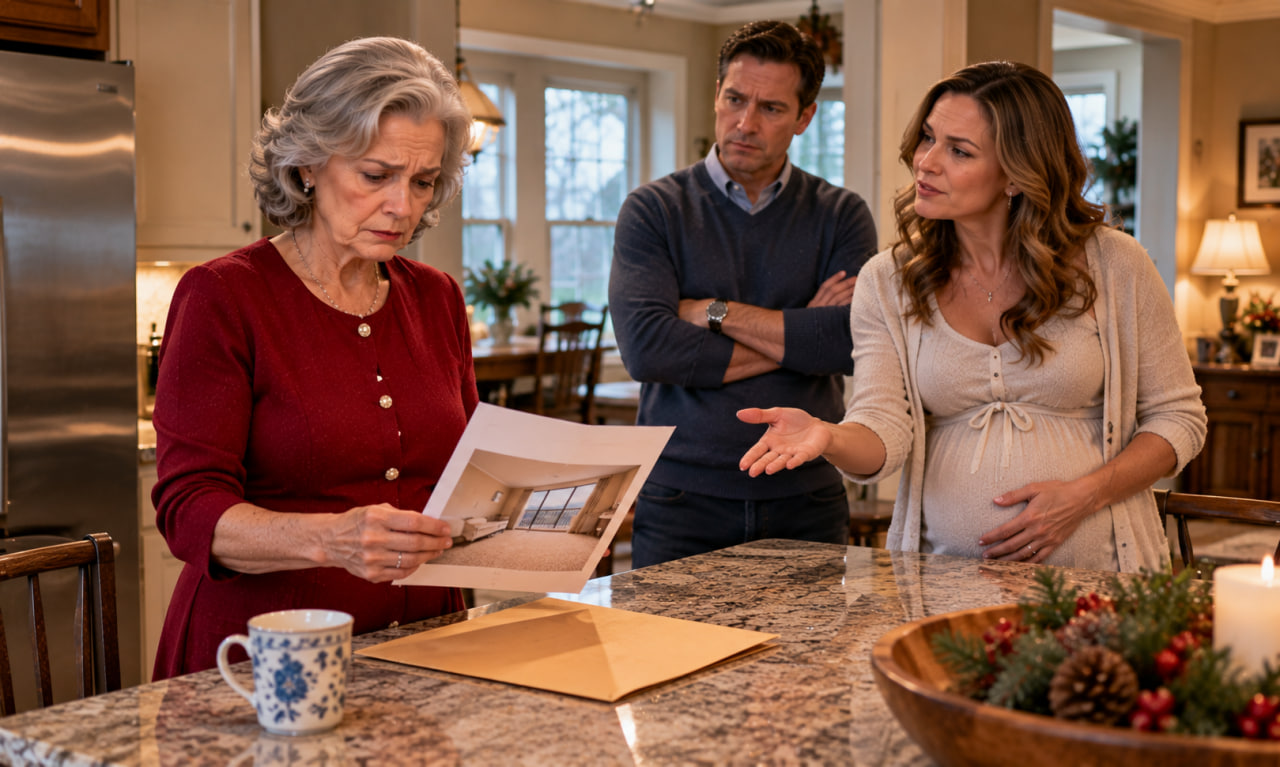
Inside was a printed email from a local estate planning service, along with a list of questions about property ownership, living arrangements, and the possibility of transferring a house to a family member.
At the bottom of the page, Serene had written:
We should discuss this before the baby arrives.
I stood motionless.
The email itself was not a legal document, and it did not transfer ownership of anything. But its presence made one thing clear: my daughter-in-law was still trying to push the situation toward an outcome I had already rejected.
I took a photograph of the pages and sent it to Gail.
Then I called her.
“Do you want me to send a formal notice now?” she asked.
I looked around the kitchen.



One Comment on “PART5: My Daughter-in-Law Tried to Move Me Out of My Own House at 72—Then I Placed an Envelope on the Kitchen Counter”