“Do you have their payments?”
“Most of them.”
“Then you’re going to contact every person who paid you and tell them the truth. You’ll return the money for any access you sold without my permission. You’ll give me a complete list of everyone you’ve brought here.”
He shook his head.
“I can’t refund all that money.”
“Then you should have thought about that before spending it.”
His voice rose.
“You can’t just order me around!”
I looked at him.
“No. I can’t order you around. But I can tell you that you no longer have permission to enter this property, and I can take the records to the sheriff if necessary.”
His anger faltered.
“You’d really do that to your own nephew?”
“I would do it to anyone who did this.”
He stared at me, breathing hard.
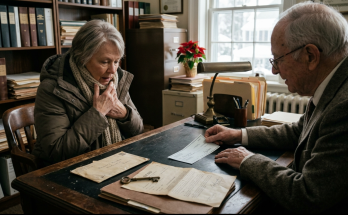
I reached into my coat and pulled out the envelope I’d carried from home.
Inside were copies of the property deed and the most recent tax receipt.
I handed them to him.
“Read them.”
He looked at the pages without taking them.
“You know I don’t need to see those.”
“Then you’ll have no trouble looking at them.”
He finally took the envelope.
His eyes moved over the printed address, the legal description, and my name.
For the first time that morning, he looked frightened.
Not remorseful.
Frightened.
“Your name is on everything,” he whispered.
“Yes.”
He looked at me.
“But Wes said—”
“Wes said many things when he was alive. If he had wanted to leave the property to you, he could have done so in his will. He didn’t.”
Cody lowered the papers.
“I thought he wanted me to have it.”
I believed that he had convinced himself of that.
Perhaps he had mistaken affection for a promise. Perhaps years of being welcomed onto the property had slowly become, in his mind, a kind of inheritance.
But there was a difference between misunderstanding what someone loved and deciding that love gave you the right to take it.
“Did Wes ever tell you that you could sell hunting access?” I asked.
“No.”
“Did he ever tell you that the land was yours?”
Cody hesitated.
Then he shook his head.
“Not exactly.”
I nodded.
“Thank you for finally telling me the truth.”
He looked at me with wet eyes, and for one moment I saw the boy who used to run down this path with a fishing pole, shouting for Wes to come see what he’d caught.
I missed that boy.
I did not owe the man he had become the right to keep hurting people.
“Leave your key on the stump,” I said.
His head snapped up.
“Aunt Marlene—”
“The key, Cody.”
Slowly, he reached into his pocket.
He placed the old brass key beside the coffee cups.
Then he turned and walked to his truck.
Before he climbed inside, he looked back at me.
“You know Mom is going to hear about this.”
“I expect she will.”
“She won’t forgive you.”
I picked up the thermos.
“That’s between your mother and me.”
He drove away without another word.
I watched his truck disappear beyond the gate.
Then I sat back down on Wes’s bench.
The morning sun was beginning to break through the trees, casting pale gold across the frozen creek. Somewhere beyond the western fence, a deer moved through the brush.
I poured myself the last of the coffee.
It had gone cold.
I drank it anyway.
Because I had learned something in the twenty months since Wes died.
Grief makes you lonely enough to forgive things you shouldn’t.
And loneliness can make you mistake keeping the peace for keeping the people you love.
I had spent too long doing that.
Not anymore.
At eight forty-seven, Deputy Schmitt’s truck appeared at the gate.
He parked beside the post, climbed out, and walked toward me with his radio clipped to his jacket.
“Well,” he said, looking at the empty cups. “I take it you had company.”
“Two hunters and one nephew.”
He looked toward the road.
“Everybody leave peacefully?”
“Yes.”
“Good. Tell me what happened.”
I handed him my phone, showing him the payment confirmations and the agreement Cody had sent Richard.
He read everything without speaking.
Then he looked at the property deed.
“I’m glad you called before confronting him,” he said. “We can document what happened and figure out the appropriate next steps. If he’s been collecting money from multiple people under a false claim of ownership, we need to understand the full extent of it.”
“I want the people who paid him to get their money back.”
“That’s a reasonable goal. But we’ll need the records.”
“I’ll get them.”
He handed my phone back.
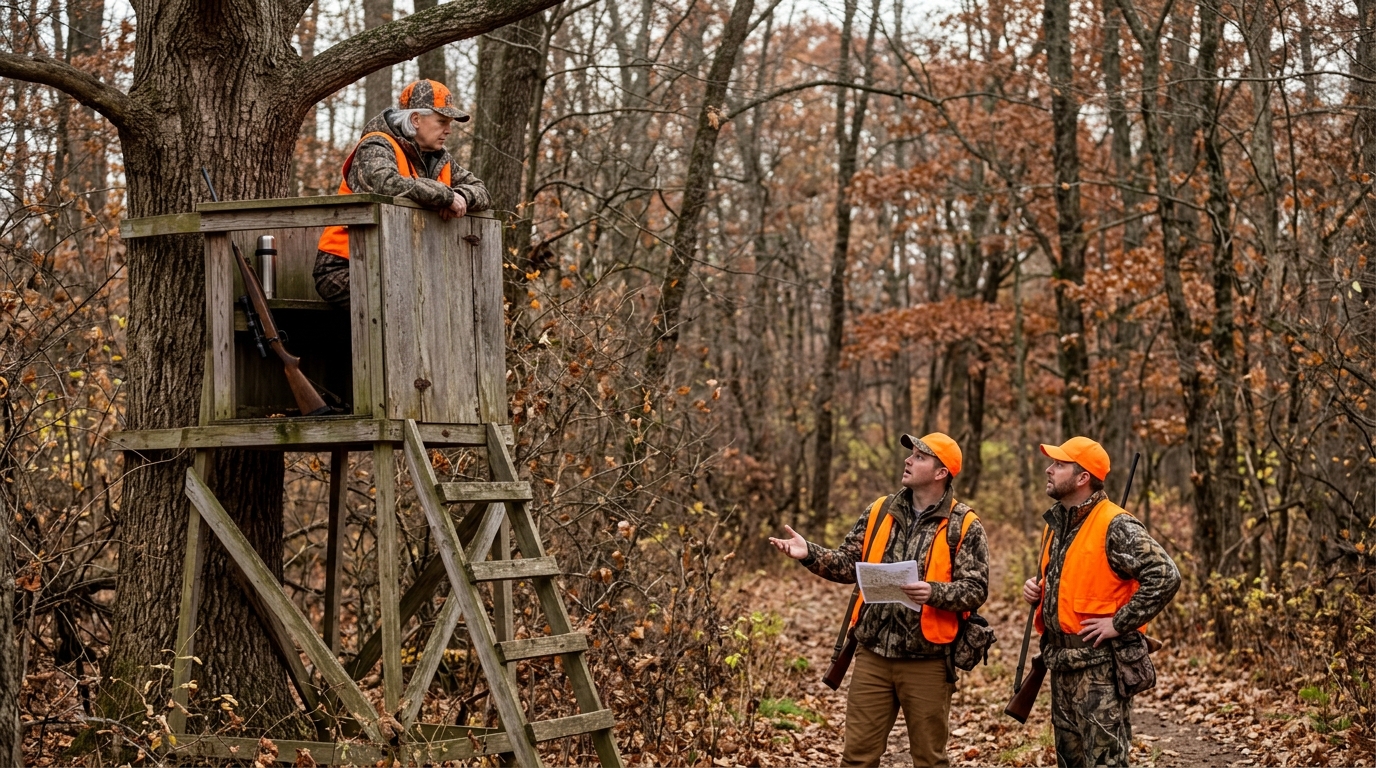
Then he looked up at the stand.
“Wes built this?”
“Yes.”
“Good man.”
I smiled faintly.
“He was.”
Deputy Schmitt stayed for another twenty minutes, taking notes and photographing the agreement. Before he left, he reminded me to change the gate lock and avoid meeting Cody alone if things became heated.
I promised I would.
Then I climbed the ladder one last time that morning and sat on the bench.
From up there, I could see the whole eastern field.
The land didn’t look different.
The trees were still standing. The creek was still frozen. The fence posts still marked the boundaries Wes had walked so many times.
But something inside me had shifted.
For the first time since my husband died, I no longer felt as though I was merely preserving what remained of our life.
I was protecting it.
And I had a feeling this was only the beginning.
Because at 10:16 that morning, my sister called.
I let it ring twice before answering.
“Marlene,” Linda said, her voice already trembling with anger, “what on earth have you done to Cody?”
I looked across the field.
Then I said the one thing I knew she wasn’t expecting.
“Linda, before you defend your son, I think you should ask him what he did with the money from the hunters.”
There was a long silence.
Then my sister whispered, “What money?”
And that was when I realized Cody might not have told his mother the whole story, either.