PART 4
For several seconds, I could hear nothing but my sister’s breathing.
“What money, Marlene?” Linda asked again.
I stood beside the kitchen window, looking out at the bare maple tree in my backyard. Wes had planted it the year we bought our first house. He used to joke that the tree would outlive both of us.
He had been right about the tree.
I wasn’t so sure about everything else.
“Cody has been charging people to hunt on my eighty acres,” I said. “One hundred and fifty dollars per person, per day. He told them the land belonged to him because Wes had left it to him.”
Linda didn’t answer.
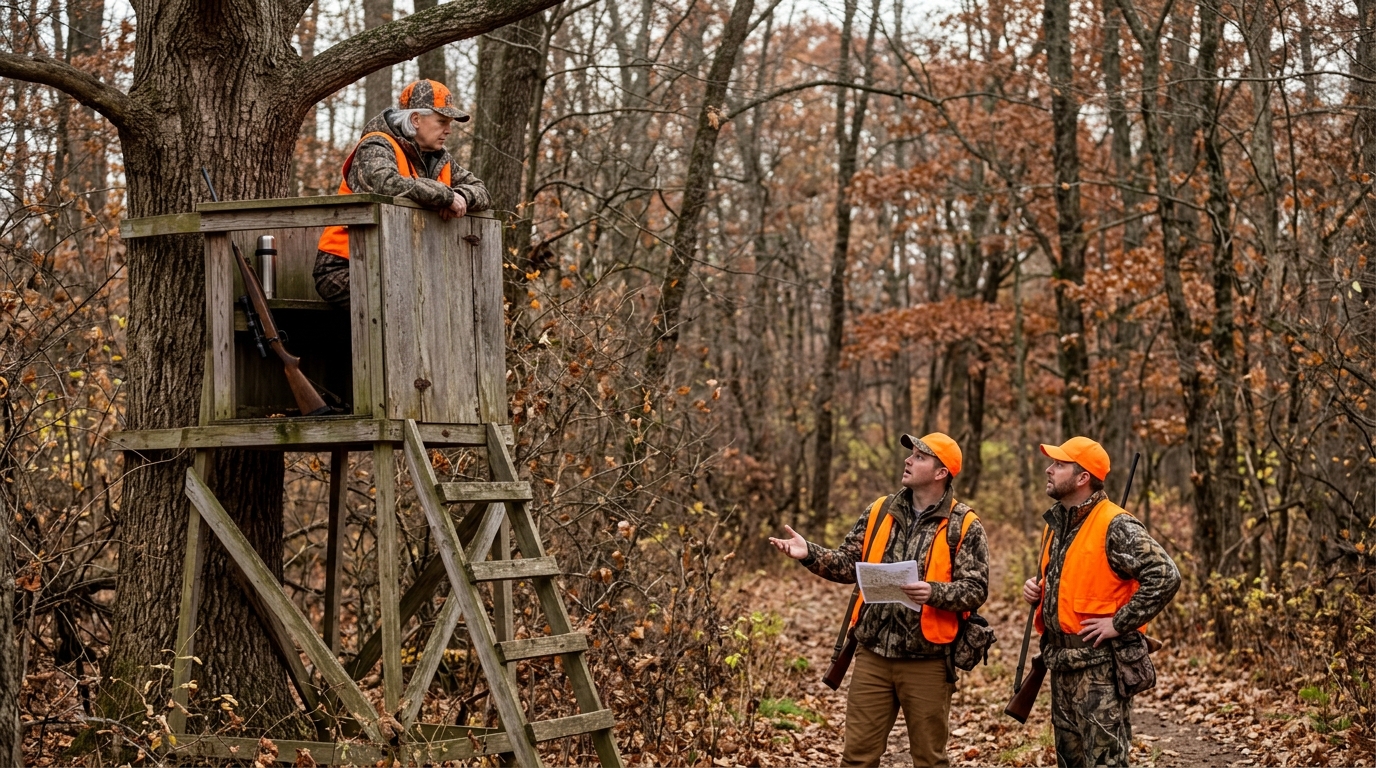
“I caught two hunters there this morning. A father and his fifteen-year-old son. They paid Cody six hundred dollars for two days.”
Finally, she spoke.
“That’s impossible.”
“I wish it were.”
“Cody wouldn’t do something like that.”
“He did.”
“He loved Wes!”
“I know he did.”
“Wes was like a father to him. You know that better than anyone.”
“I know exactly how much Wes loved him, Linda. That’s why this hurts so much.”
My sister started crying.
It was a familiar sound. Linda had always cried when she felt cornered, and for years I had responded by softening my words, apologizing for my tone, or finding some way to make the problem smaller.
Not that morning.
I had spent twenty months learning that being a widow did not mean I had to spend the rest of my life making everyone else comfortable.
“Has Cody called you?” I asked.
“No.”
“Then I’d like you to speak with him before you call me again.”
“Marlene, he’s struggling. You know that. He hasn’t had an easy life.”
“Neither has everyone else who gets up in the morning and pays their bills.”
“He’s family!”
“So am I.”
The words came out quietly.
That seemed to surprise her more than if I had shouted.
I continued.
“I helped Cody when he needed rent money. I paid for his tires. I covered his electric bill. I never asked him to repay every dollar immediately. I did those things because I loved him, and because Wes loved him.”
“Then why are you doing this to him?”
“I’m not doing anything to him. I’m asking him to stop doing this to other people.”
Linda fell silent again.
Then she said, “You sound just like a stranger.”
I looked at the old wedding photograph on my mantel.
Wes stood beside me in his dark suit, smiling at something outside the frame. Linda was behind us, holding a bouquet of flowers and laughing.
We had all been younger.
We had all believed family meant something that could survive almost anything.
“Maybe,” I said. “But strangers don’t usually have to learn how to protect themselves from the people they love.”
I ended the call before she could answer.
Then I sat at the kitchen table and began writing down every expense I could remember paying for Cody over the past three years.
The list was longer than I expected.
Rent. Tires. Electricity. A broken water heater in his apartment. Two car payments he said he would catch up on. A dentist bill. Groceries during a period when he claimed his employer had reduced his hours.
I hadn’t kept a ledger.
I had kept a relationship.
Those were different things.
At the bottom of the page, I wrote:
Helping someone is not the same as giving them permission to hurt someone else.
Then I folded the paper and put it in my desk drawer.
I had a feeling I would need to remember those words.
The next morning, Linda arrived at my house without calling.
She came through the front door carrying a covered dish, a habit she’d maintained since we were children. In our family, people brought food when they wanted to apologize, deliver bad news, or start an argument they hoped would end before dinner.
She placed the dish on the counter.
“I made chicken and noodles,” she said.
“Thank you.”
She removed her coat and sat at the kitchen table.
For a while, we talked about ordinary things. The weather. The price of groceries. A neighbor whose barn roof had been damaged by the wind.
Then Linda put both hands around her coffee cup.
“Cody told me you humiliated him.”
I sat opposite her.
“He told you about the hunters?”
“He said you invited strangers onto the property to make him look like a thief.”
I stared at her.
“Linda, the hunters were already on the property. Cody had invited them.”
She looked down at her coffee.
“He said he thought Wes wanted him to have the land someday.”
“Did he show you a will?”
“No.”
“Did he show you a deed?”
“No.”
“Did he ever tell you that he had legal ownership?”
Linda hesitated.
“He said Wes promised him something.”
“What did he promise?”
“I don’t know.”
“Then how can you defend a promise you can’t describe?”
Her eyes filled with tears.
“You don’t understand what it was like for him growing up. His father left. Cody spent years thinking he wasn’t wanted.”
“I understand that very well.”
“Wes made him feel like he belonged.”
“Yes,” I said. “He did.”
For the first time, we agreed on something.
Wes had never treated Cody like an unwanted child. When Cody was twelve, Wes bought him a secondhand fishing rod. When he was fourteen, Wes took him to the county fair and let him enter a livestock auction just to learn how it worked. When he was sixteen, Wes taught him how to change the oil in a truck.
Wes didn’t have children of his own.
He used to tell me that love wasn’t measured by whether a child carried your last name. It was measured by whether you showed up when that child needed you.
He had shown up for Cody countless times.
But Linda was remembering those years differently now.
“Cody thinks that land should have been his,” she whispered.
“Why?”