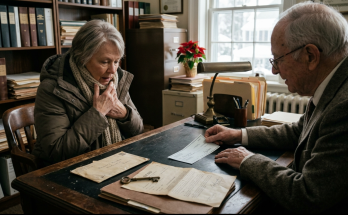
“I thought if Wes left me the land, it would prove I mattered to him.”
I looked at my nephew.
“Did you ever doubt that you mattered to him?”
He swallowed.
“Sometimes.”
I took a breath.
“Wes didn’t need to leave you eighty acres to prove he loved you. He showed you every time he taught you something. Every time he picked you up. Every time he made room for you at his table.”
Cody’s eyes filled.
“I know that now.”
I placed my hand on his shoulder.
“Then don’t spend the rest of your life trying to prove you deserved what he already gave you.”
He bowed his head.
For a moment, none of us spoke.
Then Linda took my hand.
“I miss him,” she whispered.
“So do I.”
We stood beside the creek until the wind grew colder.
When we finally turned toward the gate, Cody walked a few steps behind us.
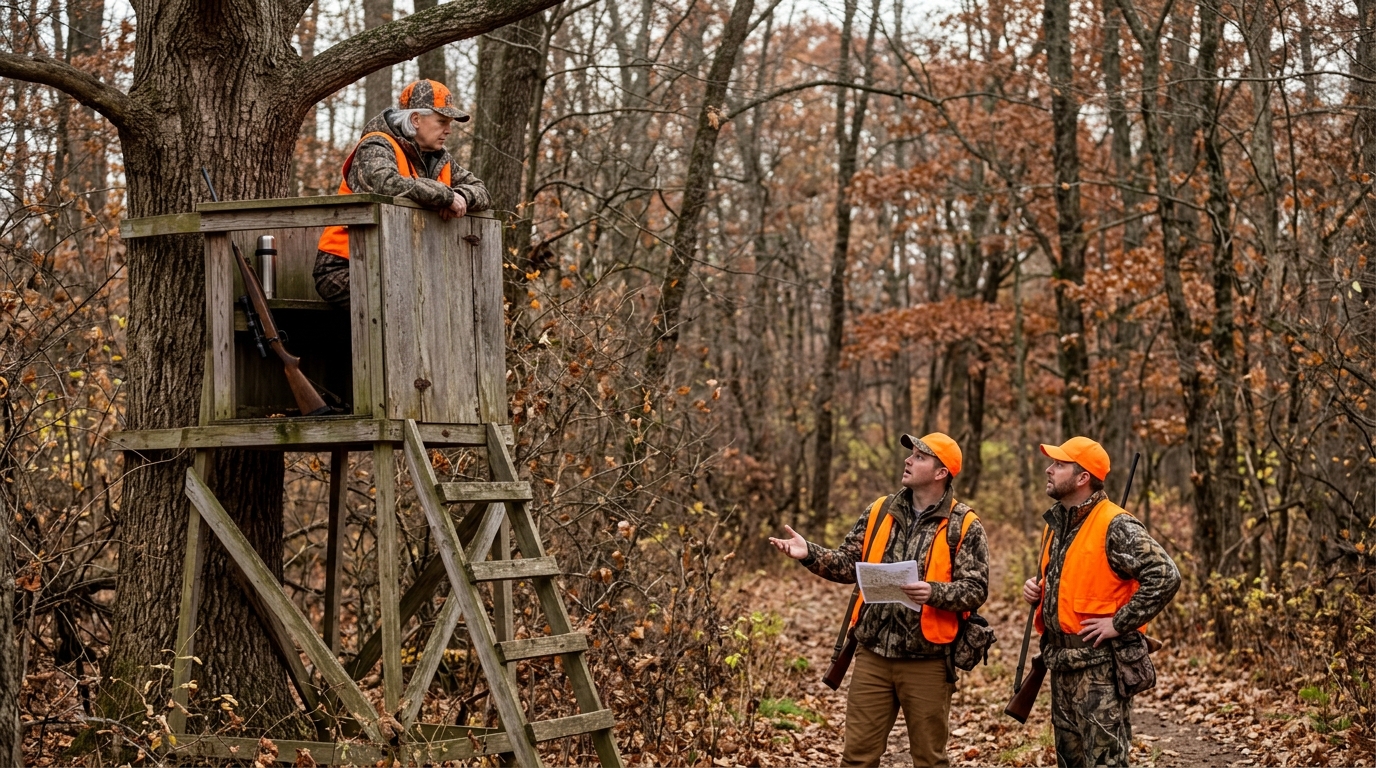
He stopped at the old oak tree and looked up at the stand.
“Aunt Marlene?”
I turned.
“Yes?”
“Would you ever let me sit up there with you again?”
I looked at the ladder.
I thought about the morning I’d found him selling what wasn’t his. I thought about Richard and Evan, the eleven hunting groups, the money, the lies, and the long months it had taken to repair even a small part of the damage.
Then I thought about the fence we’d repaired together.
The money he’d repaid.
The way he’d waited outside the gate until I opened it.
Trust wasn’t a door that swung open because someone knocked.
It was a gate that had to be unlocked one careful decision at a time.
“Not this season,” I said.
He nodded.
“I understand.”
“But maybe next year, if you keep doing what you said you’d do.”
He smiled faintly.
“I’d like that.”
We walked back to our cars.
Before Cody left, he handed me the shed key.
“I won’t need this again until you ask me to help.”
I looked at the brass key in my palm.
“You can keep it for now,” I said. “But remember what it opens.”
He nodded.
“The shed.”
“And?”
He looked across the land.
“Something I don’t own.”
I smiled.
“That’s right.”
He drove away, and Linda followed a few minutes later.
I stayed at the gate until both vehicles disappeared down the gravel road.
Then I locked it.
Not because I was angry.
Not because I wanted to punish anyone.
But because it was my land, and I had finally stopped feeling guilty about protecting what was mine.
That evening, I sat in the living room with Wes’s old photograph in my hands.
His smile was exactly as I remembered it.
I ran my thumb along the edge of the frame.
“You would have hated all that fuss,” I whispered.
Then I laughed softly.
“But I think you’d have liked the ending.”
Outside, the wind moved through the maple branches.
And for the first time in twenty months, the house didn’t feel quite so empty.
I had learned that love could be generous without being blind. That forgiveness could be offered without surrendering your boundaries. And that family was not entitled to everything you owned simply because they shared your history.
Wes had left me eighty acres of timber, creek bottom, and memories.
But he had left me something else, too.
The knowledge that a good life wasn’t measured by how much you gave away.
It was measured by whether you could give freely, stand firmly, and still leave room in your heart for people to change.
I turned off the lamp and went upstairs.
The next morning, I would check the fence again.
I would pay the taxes when they came due.
I would keep the gate locked when it needed to be locked, and open it when I decided the time was right.
And every autumn, when the first cold wind moved across the creek, I would take Wes’s old thermos to the stand, pour myself a cup of coffee, and remember the man who had taught me that caring for something meant protecting it.
Even when the person you had to protect it from was someone you loved.