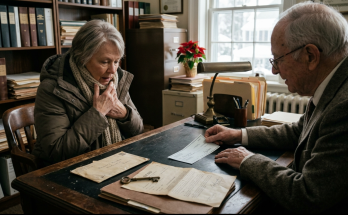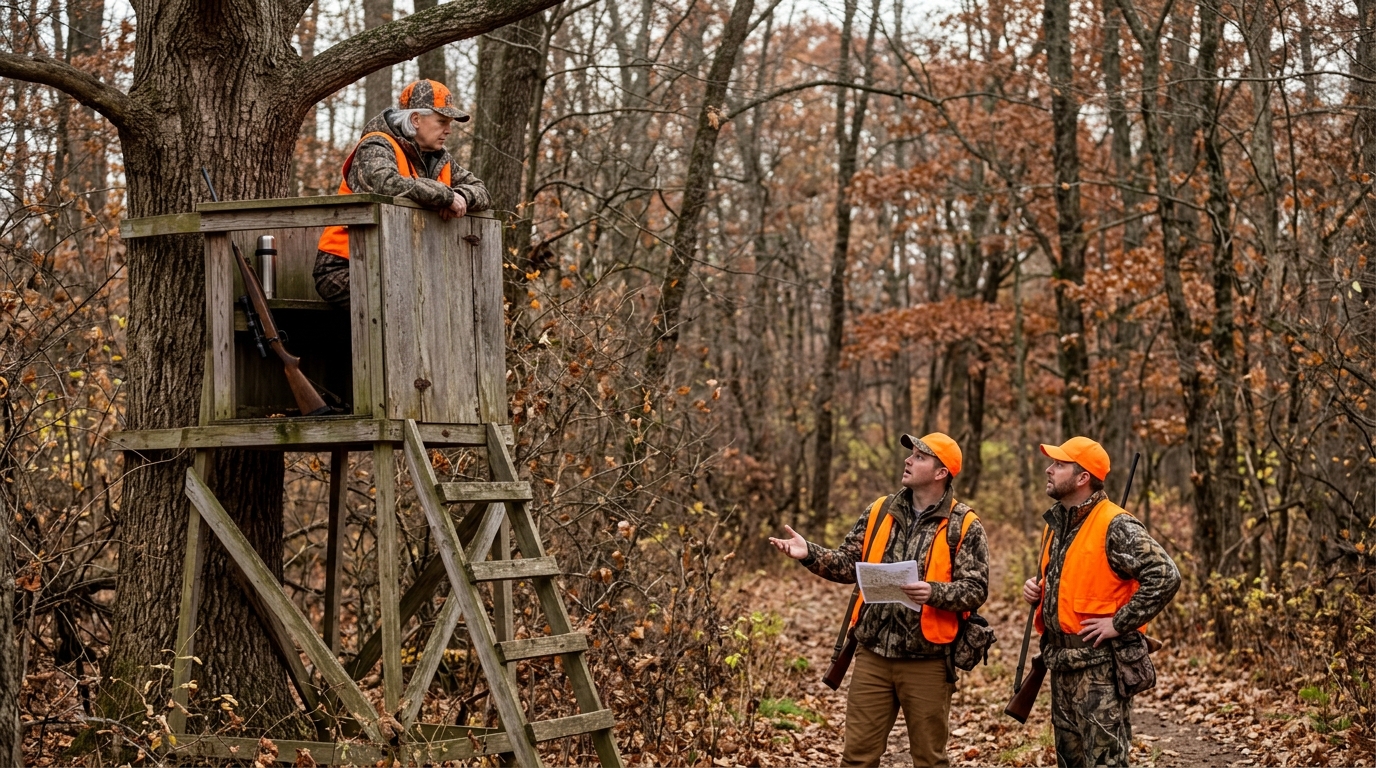
“Because he spent so much time there. Because Wes taught him everything he knew about hunting. Because he believed he was going to inherit something.”
I reached into the drawer beside the table and pulled out a folder.
Inside were copies of the deed, the property tax receipts, and the relevant pages of Wes’s will.
I laid them in front of her.
“Wes left the land to me. He made that decision carefully. We discussed it with our attorney. I have paid every tax bill and maintained the property since he died.”
Linda studied the papers.
“But what if he wanted Cody to have it later?”
“Then he could have written that down. He didn’t.”
She pressed a tissue against her cheek.
“He would be devastated to know you’re fighting.”
I thought about that.
Then I shook my head.
“No. Wes would be devastated to know Cody lied to people in his name.”
Linda flinched.
I softened my voice, but not my words.
“I don’t want Cody to lose his future over this. I want him to take responsibility before it gets worse.”
“What are you going to do?”
“I’ve asked him to return the money and provide a list of everyone he charged. The deputy has documented what happened. If Cody cooperates, perhaps we can resolve the financial damage without making everything worse. But I won’t pretend it never happened.”
Linda looked at the papers again.
Then, for the first time, she asked the question I had been waiting for.
“How much money did he take?”
“I don’t know yet.”
Her face went pale.
That afternoon, I learned why.
Cody called me at 3:40 p.m.
He sounded exhausted.
“Aunt Marlene, I need to talk to you.”
“I’m listening.”
“I’ve been going through my records.”
“And?”
“There were more groups than I remembered.”
“How many?”
“Eleven.”
I gripped the telephone.
“Eleven groups?”
“Some came for one day. Some came for a weekend.”
“How much did you collect?”
He didn’t answer immediately.
Then he said, “A little over nine thousand dollars.”
I closed my eyes.
Nine thousand dollars.
It wasn’t a fortune to everyone, but it was enough to represent a great deal of work for the people who had paid him. Some might have driven hundreds of miles. Some might have taken time off work. Some might have saved for months to share a weekend in the woods with their children.
“How much of it do you still have?” I asked.
“Not much.”
“Where did it go?”
“My bills.”
“Which bills?”
“Rent. The truck. Credit cards. I was behind on everything.”
“Did you spend any of it on something unnecessary?”
He was silent.
“Cody, I need an honest answer.”
“I bought a new rifle scope.”
I sat very still.
“How much?”
“Six hundred and forty dollars.”
I looked toward the window.
The last time Wes had bought a scope, he spent three weeks comparing prices before choosing one. He had brought it home, set it on the table, and explained every feature to me as though I were preparing for an examination.
Then he’d laughed when I told him I couldn’t tell the difference between one scope and another.
He never would have bought expensive equipment with money he’d obtained by lying to someone.
“Cody,” I said, “you need to stop making excuses and start making a plan.”
“I know.”
“Do you?”
“Yes.”
“Because the people you charged are entitled to the truth. And they deserve their money back.”
He exhaled shakily.
“I don’t have nine thousand dollars.”
“Then you’ll need to work out how to repay it.”
“How?”
“That is your responsibility to figure out.”
He sounded wounded.
“You’re not even going to help me?”
I looked at the list in my desk drawer.
“I’ve helped you for years. I will help you find a way to make things right, but I will not pay back the money you took under false pretenses. That would only teach you that someone else will always clean up after you.”
He was quiet for a long time.
Finally, he said, “What if I apologize?”
“An apology is a beginning. It isn’t a refund.”
He let out a breath.
“All right.”
“First, send the deputy and me a complete list of the people you charged. Second, contact each one and tell them the truth. Third, work out a repayment schedule you can actually maintain.”
“And the land?”
“You no longer have permission to enter it without my written approval.”
His voice tightened.
“So that’s it? I’m just not allowed there anymore?”
“For now, yes.”
“But Wes—”
“Wes is gone, Cody.”
The words hurt me as much as they hurt him.
I took a breath.
“And we don’t honor him by pretending his death changed the truth about who owns his property.”
He began to cry.
For several seconds, neither of us spoke.
Then he whispered, “I really did love him.”
“I know.”
“I miss him.”
“So do I.”
It was the first honest conversation we’d had in months.
It didn’t erase what he’d done.
But it gave us somewhere to begin.
Over the next week, the truth unfolded slowly.
Cody sent the list of eleven groups to Deputy Schmitt. He also provided copies of his payment records and the messages he had exchanged with the hunters.
Some had paid cash.
Others had used electronic transfers.
A few had received nothing more than a text message confirming their dates.
One man had traveled from Kansas with his two adult sons. Another had brought his brother, who had recently finished cancer treatment and wanted to spend a weekend outdoors.
And one of the eleven groups had been a grandfather and his grandson.
The boy had been thirteen.
I sat at my kitchen table reading the messages, feeling a growing sadness that had nothing to do with the money.
These people had come looking for a few quiet days in the woods.
They had come expecting honest dealings.
Instead, they had walked onto land where the owner hadn’t even known they were coming.
Deputy Schmitt contacted the affected hunters and explained the situation. I offered to provide copies of the deed and a written statement confirming that Cody had no authority to sell access to the property.
Most were angry.
A few threatened to sue.
One man wrote that he had already booked a motel and purchased supplies for his trip. He wanted to know whether I would reimburse those costs, too.
I understood his frustration, but I couldn’t promise to pay every expense associated with a trip I hadn’t arranged.
I told him I was willing to discuss reasonable direct losses once we had a complete accounting, and I directed him to the deputy for information about his options.
I also learned something unexpected.
The father from Omaha, Richard Miller, had not only preserved his payment records. He had kept every message Cody had sent him.
In one of those messages, Cody had written:
My uncle loved this place, and I promised him I’d keep it in the family. The hunting income helps me maintain the property.
Richard forwarded it to me.
I read it twice.
Cody hadn’t merely claimed to own the land.
He had told people he was maintaining it.
In reality, I had paid the property taxes, hired someone to repair the fence, and covered the cost of clearing fallen branches after a summer storm.
Cody had collected money for work he hadn’t done.
That evening, I called him.
“I’ve read your message to Richard.”
He was quiet.
“I know.”
“You told him you were maintaining the property.”
“I was going to help with the maintenance.”
“But you didn’t.”
“No.”
“Why?”
He gave a bitter laugh.
“Because once I started, it got away from me.”
I leaned back in my chair.
“That’s how dishonesty works, Cody. The first lie creates a problem. The next lie is supposed to protect you from the first one. Before long, you spend more energy hiding what you’ve done than it would have taken to do the right thing.”
“I know that now.”
“I hope you do.”
Then I asked him a question that had been bothering me.
“Did you ever consider asking me whether you could guide a hunt here?”
He took a long time to answer.
“Once.”
“What stopped you?”
“You might have said no.”
I stared at the wall.
There it was again.
He hadn’t done this because he was certain I would refuse.
He had done it because he didn’t want to risk hearing no.
And in trying to avoid a refusal, he had decided my answer didn’t matter.
“Cody,” I said, “you may be able to repair the damage to your finances. You may even earn my trust again someday. But you need to understand that the hardest part of this won’t be paying people back.”
“What will it be?”
“Learning to accept that other people have the right to say no to you.”
He didn’t answer.
But he didn’t argue, either.
That was something.
Three weeks after the opening morning confrontation, Cody came to my house carrying a manila envelope.
He left it on the kitchen table.
Inside was a handwritten letter addressed to each of the eleven hunting groups. He had admitted that he did not own the property and had not been authorized to sell hunting access.
He had also included a proposed repayment plan.
He had sold his new rifle scope and some other equipment. He had picked up additional shifts at work and arranged to sell an old motorcycle he rarely used.
It wouldn’t cover everything immediately.
But it was a beginning.
“I want you to read the letters,” he said.
I did.
They weren’t polished. His handwriting was uneven, and in two places he had crossed out sentences and started again.
But the words were direct.
He admitted what he had done.
He didn’t blame his childhood, his debts, or my decision to keep the land.
At the end of each letter, he wrote:
You trusted me because I told you something that wasn’t true. I’m sorry. I understand that an apology doesn’t replace your money, and I will repay what I owe according to the attached schedule.
I put the letters down.
“This is better.”
He nodded.
“I should have done it before.”
“Yes.”